
Insights
Where your cyanide consumption really goes
Cyanide consumption is often where your recovery — and your budget — quietly disappears. The numbers rarely match the textbook, and the gap usually hides in chemistry the design never accounted for.
If you've spent any time with Marsden & House, you'll know cyanide gets tied up in far more than gold leaching. It reacts with copper, forms complexes with base metals, gets oxidised by oxygen, and is lost to thiocyanate formation when sulphides are present. Add preg-robbing or high dissolved oxygen, and suddenly your "theoretical" consumption is nowhere near reality.
From rule-of-thumb to plant-ready
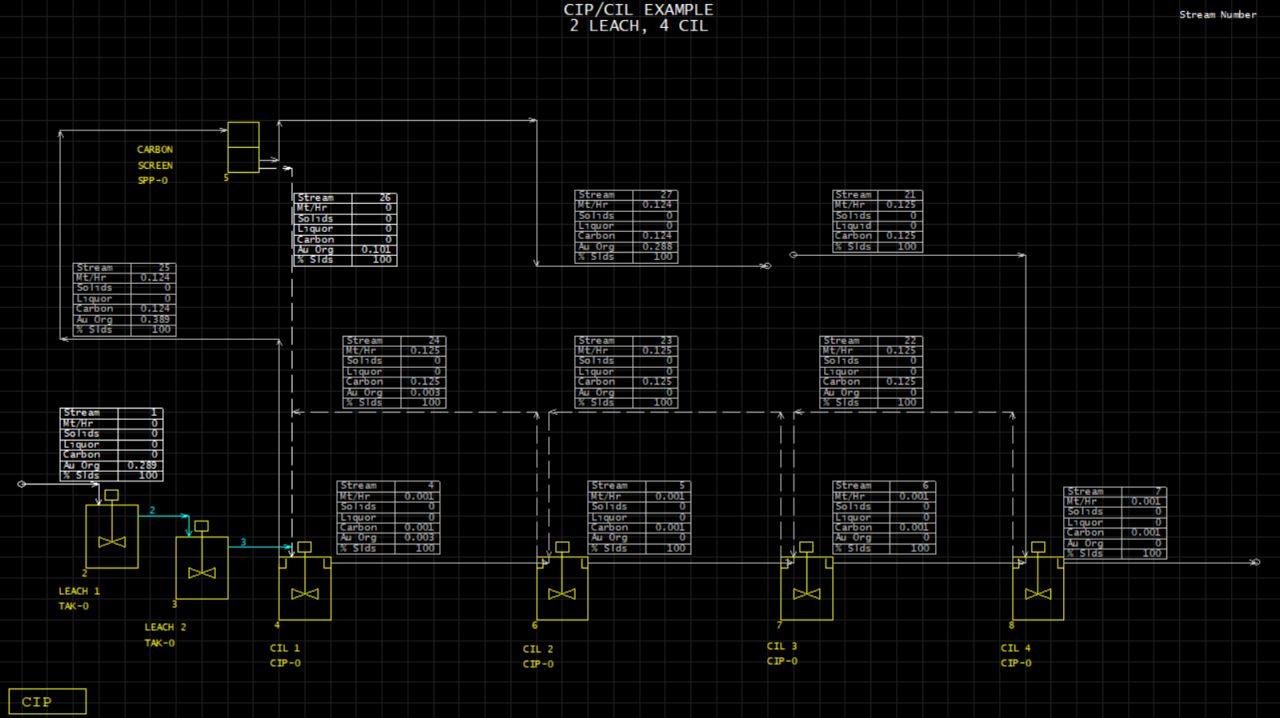
This is where chemical equilibrium modelling in METSIM® becomes powerful. Instead of guessing, you can simulate how cyanide distributes across competing reactions in your actual ore — not a generic flowsheet. You start to see where it's really going, and what you can do about it.
At Treo, we use this to move beyond rule-of-thumb design and into practical, plant-ready decisions. The model becomes a place to test interventions before they cost anything on site: changing reagent dosing, managing dissolved oxygen, or reordering the circuit to keep cyanide on the gold rather than the side reactions.
The takeaway
If your cyanide numbers don't make sense, it's worth digging deeper. The answer is almost always in the chemistry — and a good equilibrium model is the fastest way to find it before it shows up in your reagent bill.
Cyanide numbers not adding up?
Our metallurgical engineers build METSIM® models for your specific flowsheet. Let's look at where your reagent is really going.
Talk to a METSIM® engineer